

Ruminations
Some of my homilies, sermons, and thoughts about Christianity, faith and justice, hip hop, and sometimes comic books!

Embracing all of who we are: Opening Remarks for Austin Seminary
But when we reclaim our stories, we embrace all of who we are, and all of whom everyone else is and this allows us to live intensely, because as Audre Lorde also says “there is no separate survival” we need each other. And we need each other to undo negative stereotypes of God.
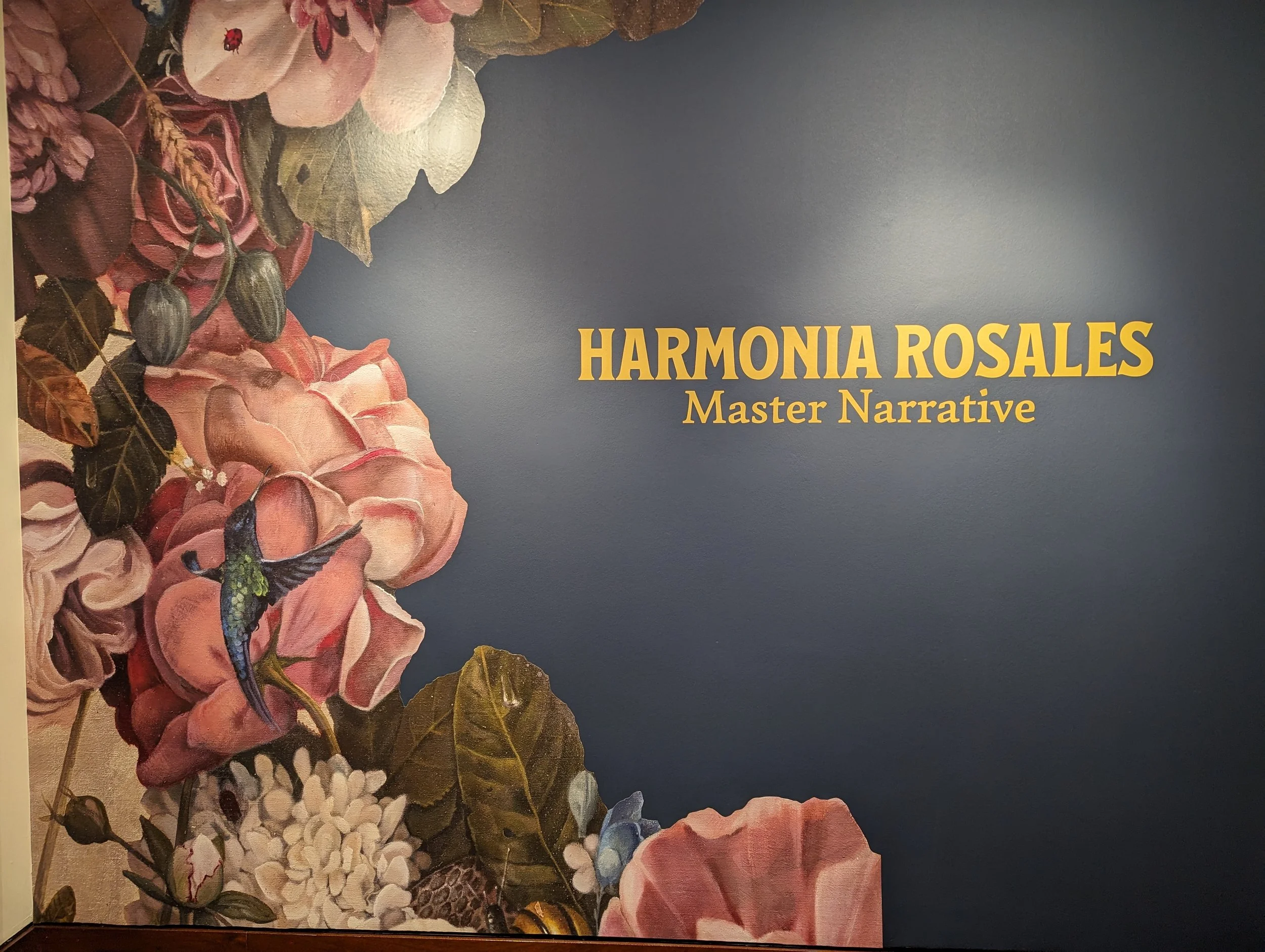
The Sacredness of Black Lives: A Reaction to Harmonia Rosales’ "Master Narrative"
Harmonia Rosales is asking us to change the master narratives we hold within and that we tell ourselves, even as Black people. She is asking us to look at the divinity of Black Lives, not only in Black depictions of deities, but in depictions of quotidian Black people. She is communicating to all visitors that Blackness is divine, and that Blackness is sacred. This aspect, the sacredness of Blackness, is not usually mentioned by any of the narratives we traditionally hold.

Love as the Leading Ethic for Black Contemplatives
All writers make observations, but what sets these writers apart is that they are not just observing; they are also grappling with questions and expressing their perspectives on society from a contemplative heart. At the center of their work is a response to a call: a call to ensure that love is what guides our future and brings us closer to ourselves, one another and the Divine. I would argue that this contemplative outlook on society may be inherent in Black writers.

“What do we talk about when we talk about the Flesh and the Spirit?” A Sermon on Romans 8:1-11
James Baldwin talks about salvation and something that is communal, something that is not on the individual, but that is enacted by the entire community because of love, that unites and does not divide us.

Learning from Black Lives: A review of Diaspora Café: D.C.
Understanding the lived experiences of Black people is the only way that we will strive to live in an Anti-Racist society and affirm all expressions of Blackness as being important in our struggle against white supremacy. By highlighting different stories of not passing, of gaining a Black consciousness, of immigration, of love, we gain an insight that is seldom seen in Black collections of poetry and are invited into seeing Blackness more fully.

AfroLatine Worship
Music that hails from Latin America or is made by Latino/as is so influenced in African rhythms that to deny this should be considered illogical. From Merengue to Cumbia to Tango, all our music, and even the names of the genres, are African Based. The music that we colloquially know as Salsa is composed of many rhythms which we know hail from African and Afro-Cuban roots. Most of our music has so much Africanity in it that it’s sound can’t be any more influenced by the African Diaspora.

AfroLatinidad & Pentecostalism
Just like my great-great grandfather, there are many stories of Latino/as of African Descent who became early converts to Pentecostalism and helped its spread throughout the Americas. These stories are not usually highlighted but are important to our understanding of Pentecostalism because they help us see it as a movement that “has been a home to the people’s cultures and to marginalized groups”[2] and one such group has been Afro-Latino/as.

‘What does understanding god from an afrolatinx perspective do?’
If we can embrace an understanding of God and a spirituality that is informed by the lived experiences of Black Latinxs, then perhaps we can better understand more of the fullness of God.

Unidos por siempre: Why we need to teach Afro-Latine theological perspectives
We know that Afro-Latines are present, we see them in our churches, we know they attend our institutes but we often do not allow their lived experiences, their faith and their navigating of the world to inform our theological perspectives that come from a Latine perspective.

Leaving a reclaimed plantation on Juneteenth
It's Juneteenth and I'm a Black man freely leaving a reclaimed plantation.

“The Peace of Jesus Different from the World's”: A Sermon for Central Christian Church of Danbury
This peace that Jesus brings, this desire for peace that Jesus is talking about, is peace to us, to those who want justice, to those who follow Jesus’s call for unity and fellowship and service. But it is not peace to those who oppose justice, to those who oppose equality, to those who want to keep people oppressed. For them, this peace is division.

Expansive Lent
Sometimes our Christian theologies have made us too focused on self-sacrifice over self-love, lack over embrace, denial over affirmation. What we need to do is to really embrace a theology that changes the way we see ourselves, our world and others.

El mensaje de mi gente: The Need for Developing an Afro-Latinx Theology
There is a need for us to develop an Afro-Latine Theology. A theology that informs us what the faith, experience and spirituality of Afro-Latines is and why it is inimitable.
![Stakes [and expectations] is high: What the Church should be according to James Baldwin and MLK Jr.](https://images.squarespace-cdn.com/content/v1/621141d5fb6328334cd984b9/1645600964264-RXWI0JWPVYKD4YJ0OS8F/Baldwin+and+MLK.png)
Stakes [and expectations] is high: What the Church should be according to James Baldwin and MLK Jr.
It is apropos to talk about the faith, the hope and the expectations of both James Baldwin and Martin Luther King jr. especially as those hopes relate to the Church.

Diverse Call of God: God's Calling Leads us to rest
Elijah is having his A Tribe Called Quest “stressed out” moment. Not one of ATCQ’s most known songs but one of my favorites and the chorus or hook to that song goes "I really know what it means to be stressed out, face to face with your adversity." I think it is important to note that it is oftentimes it is during our heights, not our lows, that fear may strike.

Latine. Who is Latine? What does it mean to be Latine? And even AfroLatine?
What we have to do is challenge ideas of erasure and racism. We need to remind everyone that every single person is made in the Image of God. We need to be more inclusive when we talk about Latines and try to emphasize the diverse experiences that the Latine community contains. We can begin by challenging the popular imagery of Latinidad that excludes Black and Indigenous representation

AfroColombian, AfroLatino Thoughts on Juneteenth
Juneteenth is important for all people of African descent because in a world that continues to deny Blackness and problematize and otherize Black bodies, it is a reminder that there are people who believe in freedom and equality for all.

Representando donde quiera: The Afro-Latin@ lived experience
For us to fully recognize, affirm, and value Afro-Latinidad as an identity, as a lived experience, and as an expression of the fullness of Latinidad, we also have to challenge our racialized theologies and challenge the use of antiquated language, theories and terminologies that all have one purpose, black erasure

“Kindom Stories: Kindom Vision, Action and Provision” A sermon on Matthew 14:13-21
That is the kindom metro, it is not subscribing to a specific creed only, it is seeing this unity amongst all of us. When we can see people beyond what our human eyes can see, and see the imago Dei, image of God within them and see them as we see ourselves, we are able to help the kindom be on earth as it is in heaven.

Assuaging Witnesses
From the New Testament’s perspective, at least, the church should expect to deliver testimony in dismal circumstances. United to an incarnate and suffering God